
 EN
EN  CN
CN RU
RU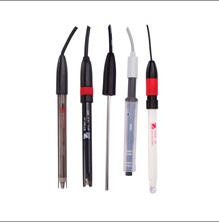
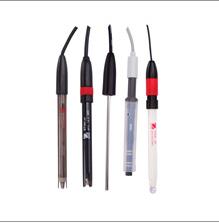
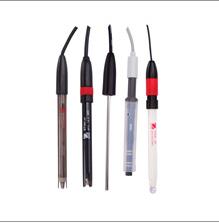
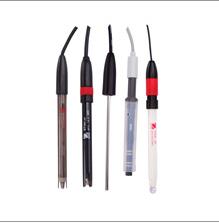
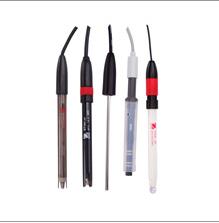
OHAUS Ohaus pH electrode STMICRO5
Price:¥1330
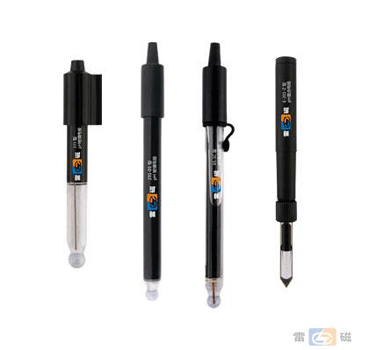



pH Electrode, yes pH The part on the meter that is in contact with the solution to be measured is a device used to measure the electrode potential value. The electrode used in the potential analysis method is called the primary battery. A primary battery is a system whose function is to convert chemical reaction energy into electrical energy, and the voltage of this battery is called electromotive force. This electromotive force consists of two and a half cells. One of the half-cells is called the measuring electrode, and its potential is related to a specific ionic activity. ; The other half-cell is a reference half-cell, usually called a reference electrode, which is generally connected to the measuring solution and connected to the measuring instrument. pH The composite electrode is pH The electrodes combined with the indicator electrode and the reference electrode can be divided into plastic shell and glass according to the shell material. Compared with the indicator electrode, the composite electrode is more convenient to use.
Technical parameters:
model | Reference osmotic ions | Sample volume | Regular samples | Solid impurities sample | Mixed liquid sample | High pollution samples | Low conductivity samples |
E-201 | K+,Cl-, Small amount of colloid, small amount Ag+ | few( ≥2ml) | ● | ● | ○ | — | — |
E-201-C | K+,Cl-, Micro Ag+ | few( ≥2ml) | ● | ● | ● | ○ | ○(Closed +Strength agent) |
E-201-CF | K+,Cl-, Micro Ag+ | few( ≥2ml) | ● | ● | ● | ○ | ○(Closed +Strength agent) |
E-201-D | K+,Cl-, Micro Ag+ | few( ≥2ml) | ● | ● | ● | ○ | ○(Closed +Strength agent) |
65-1 | K+,Cl-, Micro Ag+ | few( ≥5ml) | ● | ○ | ○ | — | — |
65-1C | K+,Cl-, Micro Ag+ | few( ≥5ml) | ● | ○ | ○ | — | — |
E-301-CF | K+,Cl-, Micro Ag+ | few( ≥2ml) | ● | ● | ● | ○ | ○ |
Remark: ● It means suitable for use;
○ Indicates that it can be used, the measurement wait time may be extended or the measurement accuracy may be reduced; If equipped with auxiliary measurement conditions, the use effect will be better ;
— It means that it is not recommended to use
Regular samples: Common clear water samples, with certain H+or OH- Ion concentration and good fluidity. For example, diluted hydrochloric acid and sulfuric acid solutions.
Solid impurities sample: The water sample contains suspended substances, has good fluidity, and the suspended substances have no adhesion. For example, printing and dyeing water, juice, mildly contaminated water taken, etc.
Mixed liquid sample: The water sample has not precipitated after being placed for a long time and has good fluidity. Such as milk, beverages, alcohol, etc.
Highly contaminated samples: The components in the sample have strong adhesion, very little moisture, and are prone to adhere to the surface of glass bulbs or reference salt bridges. Such as paint, cooking oil, cosmetics, etc.
Low conductivity sample: water sample has a lower conductivity, and H+or OH- Low ion concentration. Such as river water, tap water, rain water, pure water, deionized water, distilled water, etc.
E-201-Z: Large sampling volume ( ≧10mL), Used for semi-solid sample measurement, piercing the inside of the sample for pH Value measurement, such as pork, soil, etc.
E-201-P: Very small sampling volume ( ≧0.2mL), For sample surface pH Value measurements such as skin, paper, etc.
910:and CY-960 Use reference electrode pairing, with a large sampling volume ( ≧50mL), Applicable to ●Measure conventional samples, solid impurities, mixed liquid samples, ○Measure high contamination and low conductivity samples (requires full equipment and airtight measurement).
231:Used with 232 reference electrode, with a large sampling volume ( ≧20mL), Applicable to ●Measure conventional samples, solid impurities, mixed liquid samples, ○Measure high contamination samples and low conductivity samples.
221:Used with 222 reference electrode, with a large sampling volume ( ≧20mL), Applicable to ●Measure conventional samples, solid impurities, mixed liquid samples, ○Measure high contamination samples and low conductivity samples.
conventional pH Technical parameters of composite electrodes
model | Measurement range ( pH) | Measurement accuracy ( pH) | Temperature range ( ℃) | Salt Bridge Material | shell Material | Filling solution (mol/L) | External dimensions (mm) | Basic characteristics of electrodes |
E-201 | 0-14 | 0.01 | 5-60 | Polyformaldehyde | Polycarbonate | Not rechargeable | Φ12×120 | Plastic shell-composite- BNC Plug (i.e. Q9 type) |
E-201-C | 0-14 | High 0.01 | 5-60 | fiber | Polycarbonate | 3.0KCl Rechargeable | Φ12×120 | Plastic shell-composite- BNC plug |
E-201-CF | 0-14 | High 0.01 | 5-60 | fiber | Polycarbonate | 3.0KCl Rechargeable | Φ12×120 | Plastic shell-composite-waterproof BNC plug |
E-201-D | 0-14 | 0.01 | 5-60 | fiber | Polycarbonate | 3.0KCl Rechargeable | Φ12×120 | Plastic shell-composite- BNC plug |
65-1 | 0-14 | 0.01 | 5-60 | Ceramic sand core | Glass | 3.0KCl Rechargeable | Φ12×120 | Glass shell-composite-direct plug |
65-1C | 0-14 | 0.01 | 5-60 | Ceramic sand core | Glass | 3.0KCl Rechargeable | Φ12×120 | Glass bulb-composite- BNC plug |
E-301-CF | 0-14 | High 0.01 | 5-60 | fiber | Polycarbonate | 3.0KCl Rechargeable | Φ12×120 | Plastic shell-with temperature three-composite-waterproof BNC plug |
 Subscription numberWeChat Mini Program
SimplabCopyright 京ICP备09066698号-16